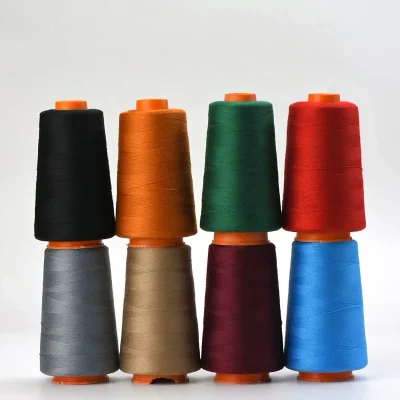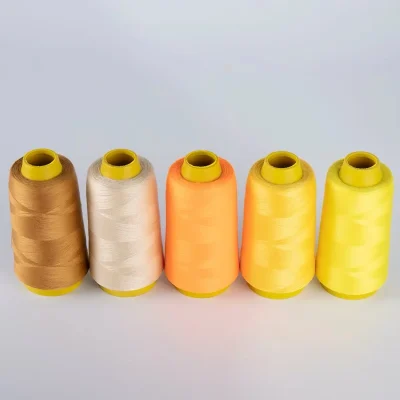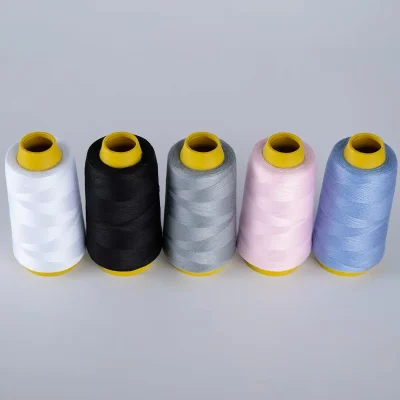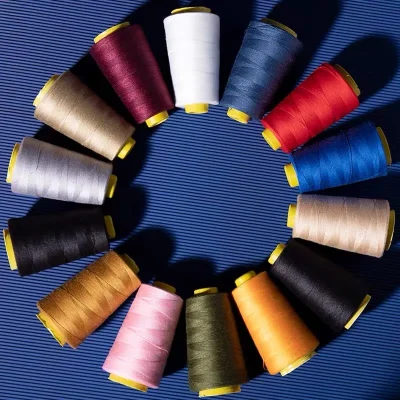
When buyers compare 40/2 polyester sewing thread price from different suppliers, they may find significant differences even when the specification appears to be the same. But 40/2 only describes the thread count and ply. It does not tell you everything about the actual thread quality, net weight, strength, twist, dyeing, lubrication, winding, or production consistency.
For garment factories, wholesalers, and sewing thread distributors, comparing price alone can be misleading. A lower-priced cone may contain less actual thread, perform poorly on high-speed sewing machines, or show inconsistent color and quality between batches. In this article, we will explain 7 important factors buyers should check before comparing 40/2 polyester sewing thread prices.
Why Does 40/2 Polyester Sewing Thread Price Vary Between Suppliers?
Although two products may both be labeled 40/2 polyester sewing thread, the actual quality and production standard can be very different. Thread count only tells you the basic construction of the yarn. It does not show how much thread is on each cone, what raw material is used, how stable the twist is, how well the color is controlled, or how the thread performs during high-speed sewing.
This is why buyers may receive very different quotations for what appears to be the same specification. To compare suppliers fairly, it is better to look beyond the price per cone and check the actual product details and sewing performance.
Actual Net Thread Weight
One of the most common mistakes buyers make is comparing the price per cone without confirming the actual net thread weight. Two cones may look almost identical, but one supplier may quote 150 g of net thread while another quotes 160 g. In some cases, the stated weight may even include the plastic tube, which makes the product appear heavier than the actual amount of thread supplied.
For buyers, the correct comparison is not simply the price per cone. It is the price based on the actual amount of sewing thread. Before comparing quotations, always ask whether the quoted weight is net thread weight or gross weight including the plastic tube and packaging. This small detail can make a significant difference when purchasing thousands of cones.
Raw Material Quality
Not all 100% polyester sewing threads are made from exactly the same quality of raw material. Even when two suppliers use the same 40/2 specification, differences in fiber quality can affect thread strength, hairiness, elongation, and overall sewing performance.
For industrial sewing, stable raw material is especially important because inconsistent fiber quality can lead to more thread breaks, uneven stitches, or different performance from one batch to another. Buyers should therefore compare not only the specification and price, but also the actual sewing performance and consistency of the thread.
Twist and Thread Construction
Twist is another important factor that can make two 40/2 polyester sewing threads perform very differently. If the twist is too loose or uneven, the thread may feel softer but can become less stable during sewing. If the twist is too tight, the thread may feel harder and may not run as smoothly through the needle and tension system.
A well-controlled twist helps balance strength, flexibility, surface smoothness, and sewing stability. For garment factories using high-speed machines, this can directly affect thread breakage, stitch appearance, and production efficiency. This is why buyers should test how the thread actually runs on their machines instead of judging only by appearance or hand feel.
Dyeing Quality and Color Consistency
Dyeing quality is another major reason why the price of 40/2 polyester sewing thread can vary. Good dyeing is not only about making the color look right once. Buyers also need stable color matching, good color fastness, and consistent shades between different production batches.
For garment factories and distributors, color consistency is especially important for repeat orders. If the same color looks different from one batch to another, it can create problems in production and make replenishment difficult. A reliable supplier should be able to control color differences as much as possible and maintain stable dyeing standards for bulk orders.
Lubrication and High-Speed Sewing Performance
Lubrication has a direct effect on how polyester sewing thread performs at high sewing speeds. Proper lubrication helps reduce friction between the thread, needle, guides, and tension system, allowing the thread to run more smoothly during continuous production.
If lubrication is poorly controlled, the thread may generate more heat, create higher friction, or break more frequently during sewing. However, more lubricant does not always mean better performance. The key is stable and appropriate lubrication that matches the thread construction and intended sewing application. For buyers, actual machine testing is often the best way to evaluate this point.
Winding Quality and Cone Consistency
Winding quality may look like a small detail, but it can have a big impact on sewing performance. If the thread is wound too loosely, too tightly, or unevenly, it may not unwind smoothly during sewing and can cause unstable tension, tangling, or thread breaks.
For buyers purchasing large quantities, cone-to-cone consistency is also important. Each cone should have stable winding density, similar shape, and consistent thread quantity. Good winding control helps the thread feed more smoothly on industrial machines and reduces unnecessary interruptions during production.
Quality Control and Batch Consistency
For industrial buyers, consistent quality from batch to batch is often more important than getting the lowest possible price. A sample may perform well, but the real test is whether the same quality can be maintained across large orders and repeat purchases.
Stable quality control helps keep strength, color, twist, lubrication, winding, and thread weight within a consistent range. This reduces production problems and makes it easier for garment factories and distributors to plan repeat orders with confidence. When comparing suppliers, buyers should ask how quality is checked during production and whether the same standards can be maintained for bulk orders.
What Should Buyers Check Before Comparing 40/2 Polyester Sewing Thread Prices?
Before comparing quotations from different suppliers, buyers should check the following points carefully:
- Net thread weight: Confirm whether the quoted weight is net thread weight or includes the plastic tube.
- Strength and elongation: Check whether the thread performs consistently during actual sewing.
- Twist: Make sure the thread has stable construction and runs smoothly.
- Color consistency: Compare shades between samples and repeat production batches.
- Lubrication: Test the thread on high-speed sewing machines.
- Winding quality: Check whether the thread unwinds smoothly and maintains stable tension.
- Batch consistency: Ask whether the same quality standard can be maintained for bulk and repeat orders.
Is the Cheapest 40/2 Polyester Sewing Thread Really Cheaper?
A lower price per cone does not always mean a lower total cost. If the thread has less net weight, breaks more often, creates unstable tension, or causes production interruptions, the actual sewing cost can become higher even when the purchase price looks attractive.
For garment factories and distributors, it is better to compare the real value of the thread rather than the unit price alone. Stable quality, reliable net weight, consistent color, and smooth sewing performance can help reduce waste, machine downtime, rework, and complaints. In many cases, these factors are more important than saving a small amount on each cone.
Looking for Stable 40/2 Polyester Sewing Thread?
If you are comparing 40/2 polyester sewing thread suppliers, do not compare price alone. Tell us your required cone weight, color, application, and packing, and we can help you choose the right specification for your market and production needs.
We support custom colors, OEM/private label, flexible packing, and sample testing before bulk orders. Contact us to discuss your 40/2 polyester sewing thread requirements and get a quotation from the factory.