When buying polyester sewing thread in bulk, price is important — but consistent quality matters even more. A thread may look good in photos or perform well in a short test, but for garment factories, wholesalers and importers, the real question is whether the same quality can remain consistent across thousands of cones.
Before placing a bulk order, buyers should check the actual thread samples carefully. In this guide, we’ll show you the most practical ways to evaluate polyester sewing thread quality before making a large purchase.
Check Sewing Thread Appearance and Winding
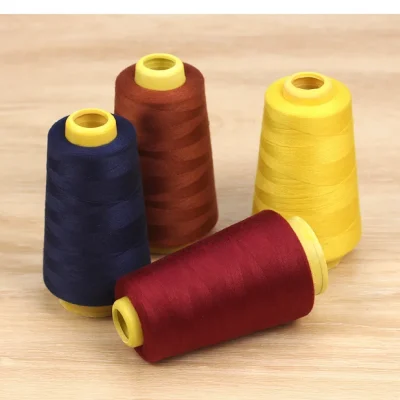
Start with a visual inspection. A well-wound cone should look neat and consistent, without obvious loose areas, irregular winding or visible defects.
Check the thread itself as well. Excessive hairiness, uneven thickness, knots or other obvious irregularities may affect sewing performance, especially during continuous production. For bulk buyers, consistency between different cones is just as important as the appearance of a single sample.
Check the Net Thread Weight
Do not check only the total weight of the cone. For bulk buyers, the actual net weight of the sewing thread is more important.
Net weight means the weight of the thread itself, while gross weight includes the thread and the tube or cone. Two cones may have the same gross weight but contain different amounts of actual sewing thread if their tubes have different weights.
Before placing a bulk order, confirm whether the supplier’s stated weight is net or gross weight. It is also a good idea to weigh several sample cones instead of checking only one, as this can help you evaluate weight consistency.
Check Thread Evenness and Hairiness
Take a short length of thread and inspect it under good lighting. The thickness should look reasonably consistent along the thread, without obvious thick or thin places.
Some surface fibers are normal for spun polyester sewing thread, but excessive hairiness can create more lint and may affect sewing performance during continuous production. When comparing samples, check several cones rather than judging the quality from only one.
Check Breaking Strength and Elongation
Breaking strength shows how much force the thread can withstand before it breaks, while elongation indicates how much the thread can stretch before breaking. Both are important when evaluating polyester sewing thread quality.
For professional testing, breaking force and elongation can be measured using standardized methods such as ISO 2062. If you are comparing suppliers for a large order, test reports can provide useful additional information.
However, higher strength does not automatically mean better sewing performance. The thread should have a suitable balance of strength, elongation, evenness and stability for its intended application.
Check Color Consistency
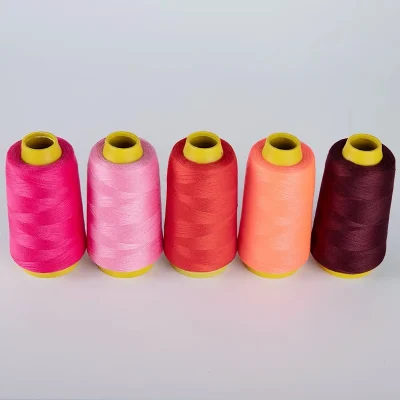
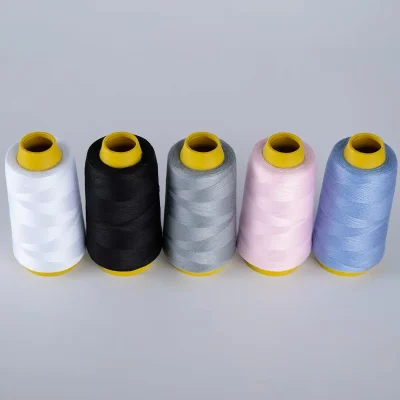
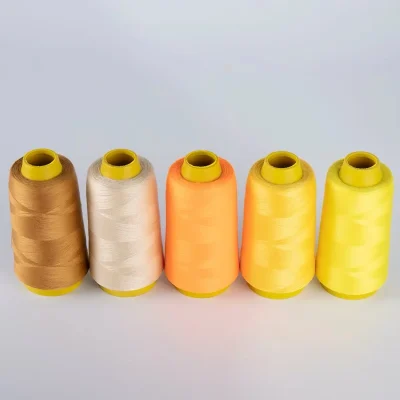
For dyed polyester sewing thread, color consistency is especially important. Compare several cones of the same color together rather than checking only one cone.
For custom colors, keep an approved sample or color reference before bulk production. The finished thread should be checked against the agreed color standard to help maintain shade consistency between the approved sample and the bulk order.
Test the Thread on Your Actual Sewing Machin
One of the best ways to evaluate polyester sewing thread quality is to test the sample under your actual production conditions.
Use the same or similar fabric, sewing machine, needle and sewing speed that you normally use in production. During the test, check whether the thread runs smoothly, breaks frequently or creates excessive lint around the needle and tension area.
Do not test only a few stitches. A longer sewing test can give you a much better idea of how the thread will perform during continuous production.
Thread Breakage Does Not Always Mean Poor Thread Quality
If the thread breaks during testing, it does not automatically mean the thread quality is poor. Incorrect tension, an unsuitable or damaged needle, improper threading, rough thread guides and other machine settings can also cause thread breakage.
Before rejecting a sample, check the complete sewing setup. If you are experiencing frequent thread breakage, read our detailed guide: Why Does Sewing Thread Keep Breaking? 7 Common Causes and Solutions.
Compare Several Sample Cones
One good sample cone does not guarantee that every cone in a bulk order will be the same. When possible, compare several samples from the same supplier and look for consistency.
| Check | What to Look For |
| Net weight | Consistent thread weight between cones |
| Winding | Neat and even winding |
| Hairiness | No excessive surface fibers |
| Color | Consistent shade between cones |
| Sewing performance | Smooth running under actual sewing conditions |
| Breakage | No abnormal repeated breakage |
| Lint | No excessive buildup during sewing |
Keep an Approved Sample Before Bulk Production
Once a sample has passed your checks and sewing test, keep one approved cone as a reference before bulk production begins.
The approved sample can be used to compare important details such as color, net weight, winding and overall sewing performance with the finished bulk order. This gives both the buyer and supplier a clear reference for quality consistency.
Polyester Sewing Thread Quality Checklist Before Bulk Order
Before placing a bulk order, do not judge polyester sewing thread quality by price or appearance alone. Check the actual samples, compare several cones and test the thread under real sewing conditions whenever possible.
Pay attention to winding, net weight, thread evenness, hairiness, color consistency, strength and sewing performance. Most importantly, keep an approved sample as a reference for the bulk production.
A reliable supplier should be willing to provide clear product specifications and samples for evaluation before a large order. Taking a little more time to check the thread before purchasing can help reduce quality problems during production.